For nearly twenty years, Dance Parade has advocated for the freedom to dance in New York.
This spring, that work helped contribute to a major victory. Governor Kathy Hochul announced that the New York State Liquor Authority would no longer scrutinize patron dancing in liquor license applications, removing one of the last significant barriers to social dancing in bars and restaurants.
Yet many New Yorkers are surprised to learn that dancing was still being regulated at all. Didn’t the repeal of the Cabaret Law solve the problem?
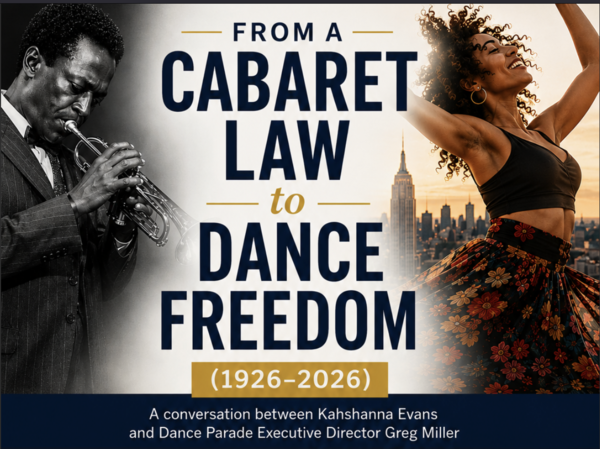
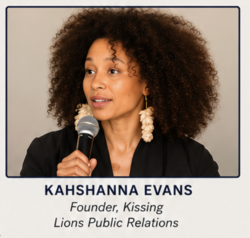
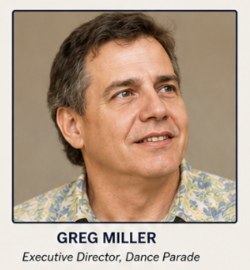
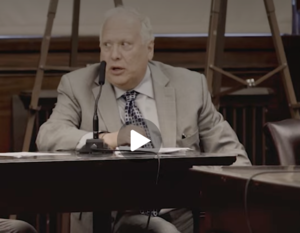
To help explain what changed, how we got here, and what challenges remain, Kahshanna Evans sat down with Dance Parade Executive Director Greg Miller.
|
Q: Greg, I think many people assumed dancing became legal when New York City repealed the Cabaret Law in 2017. Didn’t that solve the problem?
|
|
|
|
A: Not entirely. Repealing the Cabaret Law was a huge victory. It removed the requirement that venues obtain a special cabaret license before allowing social dancing.
But there were still two major barriers.
The first was zoning. Many venues were not properly zoned to permit dancing even after the Cabaret Law disappeared. It wasn’t until New York City’s zoning reforms, including portions of the City of Yes initiative, that dancing became possible in many more commercial districts.
The second barrier was at the state level. The New York State Liquor Authority (SLA) still maintained control over whether venues with liquor licenses could permit dancing. So while people believed dancing had been legalized, there were still significant obstacles.
|
|
Q: What happened this past month?
In practical terms, dancing is no longer being treated as a vice that requires special scrutiny by the state. It’s a major cultural shift and we’re really pleased and grateful.
|
 1st Inaugural Dance Parade New York (2007)
Q: How did Dance Parade get involved?
|
|
|
|
|
|
A: We’ve been advocating for dance freedom since our first parade in 2007. Dance Parade itself began as a protest against New York City’s anti-dance laws. For years we educated the public, organized petitions, met with elected officials, worked with civil-liberties attorneys, testified at hearings, and built coalitions.
More recently we found important allies in the hospitality industry, especially the NYC Hospitality Alliance.
|
|
The Hospitality Alliance brought expertise in liquor law and legislative strategy while Dance Parade contributed nearly twenty years of public education and grassroots organizing.
|
Q: Didn’t State Legislators initially propose a different solution?
A: Yes. Initially lawmakers considered a system that would have effectively created a new dance-related licensing structure.
We appreciated the Governor’s willingness to address the issue, but we
were concerned that creating another dance license would move New York
backwards.
If government creates a dance license, then someone eventually has to enforce it.
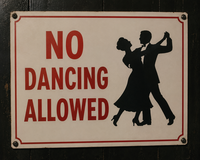
That means inspections. That means violations. That means “dance police. We’ve seen that movie before.
Fortunately the final policy change moved in a much better direction by eliminating restrictions rather than creating new ones
|
|
|
Q: Dance police? Is that why Dance Parade has the NYDP?
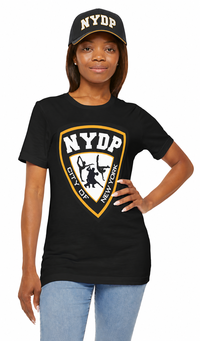
A: Exactly. The NYDP (the New York Dance Police) began as satire and was a hook to our advocacy history.
Back in the Giuliani years, the city maintained a Cabaret Task Force that conducted nightclub enforcement actions tied to dancing.
We thought the whole concept was absurd.
So our Dance Police began issuing playful citations for “non-movement violations” and “failure to dance in a free dance zone.”
|
|
For nearly twenty years Commissioner Chauncey Dandridge and his officers
have reminded people that dancing should be celebrated, not
criminalized.
|
Q: Why have some advocates described dance restrictions as racist?
A: Because many scholars distinguish between personal racism and structural racism.
Structural racism occurs when laws disproportionately affect particular
communities, regardless of the intent of the people enforcing them.
Historically, social dancing has often been associated with immigrant communities, Black communities, Latino communities, LGBTQ communities, and working-class communities.
When government places barriers around social dancing, those communities often bear the greatest burden. That doesn’t mean every individual involved is racist. It means the impact of the system falls unevenly.
Many historians have noted that concerns about interracial socializing,
immigrant culture, jazz culture, and Harlem nightlife all played roles
in the development and enforcement of anti-dance regulations during the
twentieth century.
|
Q: Were the racial underpinnings only about dancing, or did they affect musicians too?
A: They absolutely affected musicians too. For decades, New York didn’t just regulate whether people could dance. It also regulated who was allowed to perform.
Musicians and entertainers working in clubs that served food or alcohol were required to carry cabaret cards. To get one, artists had to be fingerprinted, questioned, investigated, and judged by the police. In practice, the NYPD had enormous discretion to decide who was “fit” to work.
That meant artists could lose their livelihood because of arrests, accusations, drug charges, political pressure, or vague claims about “moral character.” Black jazz musicians were especially vulnerable to this system.
|
|
Q: Can you give an example?
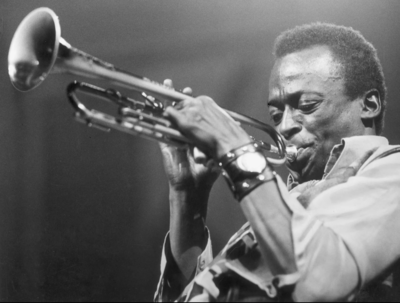
A: Miles Davis is one of the clearest examples. In 1959, just after recording Kind of Blue, Miles Davis was performing at Birdland in Midtown Manhattan. During a break, he stepped outside the club. A police officer told him to move along. Davis pointed to his own name on the marquee to explain that he was working there.
Instead, he was arrested and beaten by police. Afterward, his cabaret card was revoked, which temporarily barred him from performing in New York clubs that served alcohol. The incident became one of the most famous examples of how nightlife regulations disproportionately affected Black artists.
|
|
|
|
Q: So this wasn’t just about nightlife rules. It was about control.
A: Exactly. The cabaret card system gave the police power over artists’ livelihoods. Losing a card could mean losing the right to work in New York clubs. The system affected major artists including Billie Holiday, Thelonious Monk, Charlie Parker, and others. The Recording Academy has described the cabaret card system as one that disproportionately harmed Black jazz musicians from 1940 to 1967.
That history matters because dance restrictions came from the same worldview: nightlife, jazz, interracial socializing, immigrant culture, queer spaces, and Black cultural expression were treated as suspicious.
|
Q: How did marginalized communities experience these restrictions?
A: Social dancing is one of the most affordable and accessible forms of cultural expression.
You don’t need expensive equipment. You don’t need a stage.You don’t need formal training. You simply need a community gathering together.
When dancing is restricted, communities lose a way to celebrate identity,
preserve culture, build relationships, and create belonging.
The communities most likely to rely on those spaces are often the communities with the fewest alternatives.
|
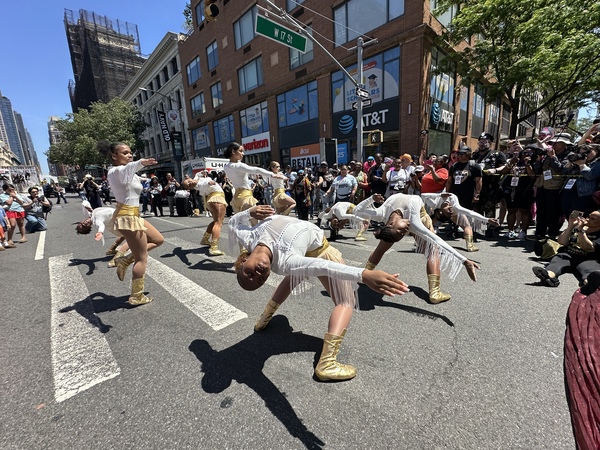
Photo by Josef Pinlac of PATHSDANCE Performing Arts & Technology HS (Majorette dance for Dance Parade’s May 16, 2026 Ribbon Cutting Ceremony)
|
Q: Has New York law actually changed?
A: Not exactly. What changed is policy. The SLA has changed how it interprets and administers the law. That’s a significant victory.
But future administrations could potentially reverse the policy. And that’s why vigilance remains important.
|
Q: How far back does this movement go?
A: Much farther than most people realize. The roots extend well before the Harlem Renaissance. Throughout the early twentieth century many lawmakers viewed social dancing as a vice.
There were fears about interracial gatherings, jazz culture, changing gender norms, and nightlife generally.
New York’s Cabaret Law eventually became one of the most notorious examples. The musical restrictions were largely dismantled decades ago, but social dancing restrictions survived much longer.
|
|
|
 Reverend Jen & the Dance Liberation Front (1999)
Q: Who helped lead the fight?
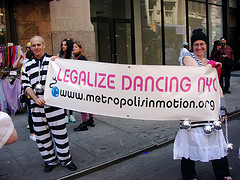
A: Many people deserve recognition. The Dance Liberation Front, Legalize Dancing NYC and Metropolis in Motion all preceded Dance Parade as advocates.
Civil-liberties attorney Norman Siegel was an important legal voice. NYU Law Professor Paul Chevigny documented and challenged many of these restrictions. And City Council Member Rafael Espinol championed the bill to repeal the NYC Cabaret Law.
|
|
In 2017, following remarks by Mercedes Ellington, Jerry Goldman offers dramatic testimony in a key hearing to repeal the 1926 Cabaret Law. Grassroots organizations such as Let NYC Dance helped mobilize public support.
The Office of Nightlife created an institutional voice for nightlife workers and cultural communities.
The NYC Hospitality Alliance and leaders including Andrew Rigie, Rob Bookman, and Max Bookman played critical roles in explaining how liquor regulations actually function and helping advance reform efforts.
This victory belongs to many people.
|
|
|
|
Q: Why did the SLA resist changing these rules for so long?
A: One concern was that restaurants might transform into nightclubs.
At first glance that sounds reasonable.
But attorneys who specialize in Alcoholic Beverage Control law helped explain why that concern was overstated.
New York’s ABC Law already contains provisions requiring restaurants to operate as genuine restaurants. Food service requirements, operating standards, and other regulations already exist.
There are already mechanisms in place to distinguish restaurants from nightclubs. Dancing itself was never the real issue.
|
Q: Is the movement finally over?
A: Not yet. One major issue remains. The SLA still asks applicants to disclose what kinds of music they intend to offer. Live music and DJs continue to receive special scrutiny in certain circumstances. We believe legitimate noise concerns should absolutely be addressed. But regulating sound levels is different from regulating artistic expression.
Government should regulate excessive noise. It should not decide whether a venue may feature a DJ, jazz ensemble, salsa band, or live performers.
That’s the next chapter and you’ll probably see our petition for that on our advocacy website legalizedance.org
|
Q: What does this victory mean to you personally?
A: It means that nearly twenty years after the first Dance Parade, we’re seeing tangible results.
Dance Parade was never just a parade. It was a movement.
Thousands of dancers, artists, advocates, business owners, attorneys, elected
officials, and community leaders helped move New York toward a simple
idea: Dancing should not require government permission.
And now Dance Parade’s 2026 theme is even more meaningful, The Beat Goes On!
|
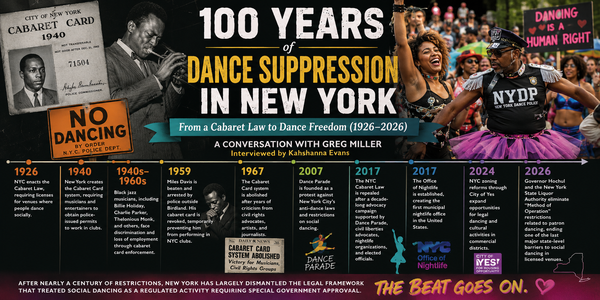
Timeline of Dance Freedom in New York:
-
1926 — NYC Cabaret Law enacted
- 1940 — Cabaret Card system introduced
-
1967 — Cabaret Card system abolished
-
1988 — Musician cabaret card requirements repealed
-
2007 — First Dance Parade
-
2017 — Cabaret Law repealed
-
2017 — Office of Nightlife created
-
2024 — City of Yes zoning reforms expand opportunities for dancing
-
2026 — SLA eliminates patron-dancing restrictions on liquor license applicants
|
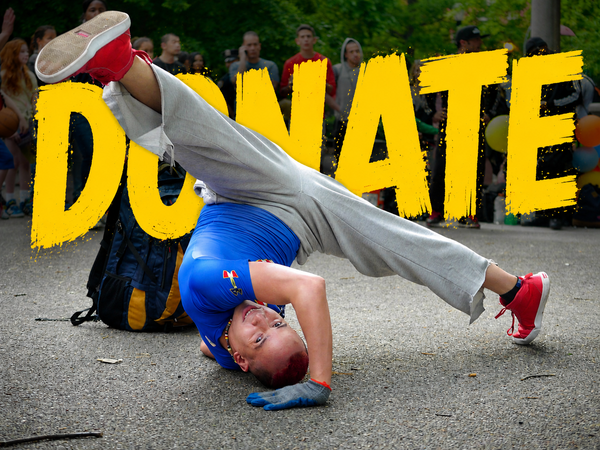 Photo by Glenmore Marshall of Joseph Jojo Romanoff (Breakdancer)
|
|
Share the joy of Dance Parade:
 . . 
|
|
|
|
 |
|